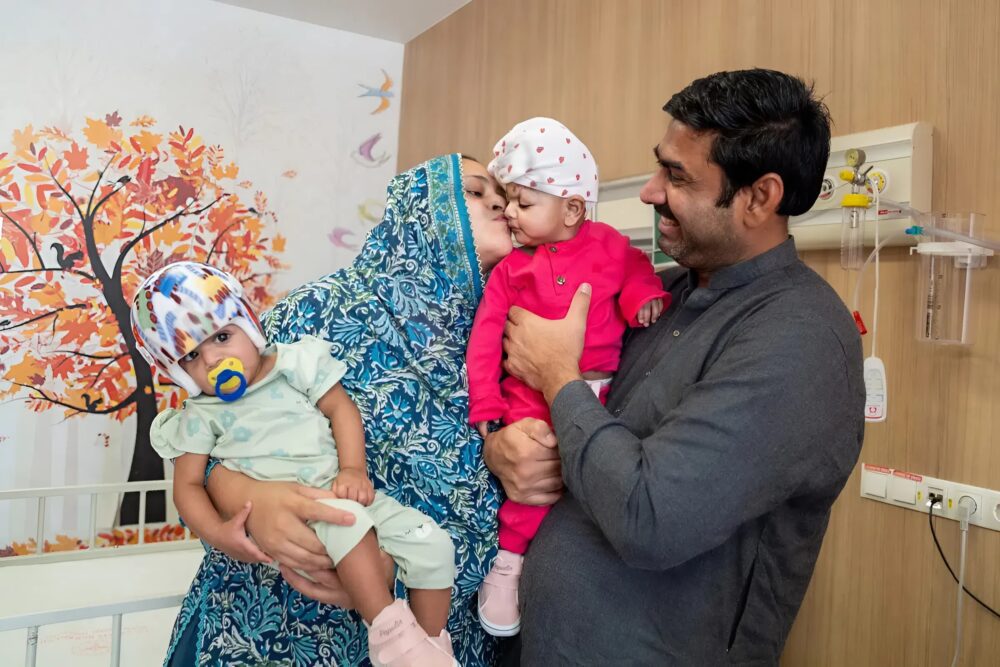
A historic operation separated craniopagus conjoined twins, thanks to 3D technology, offering a promising future 😱😱
The story of Minal and Mirha, twins born in Pakistan conjoined at the head, embodies the promise of modern medicine and technological innovation. The girls suffered from a rare condition, craniopagus, in which they shared brain tissue and vital blood vessels, making their separation extremely risky.
Thanks to the use of mixed reality (MR) technology, surgeons were able to create 3D models of the twins’ heads, allowing them to simulate the operation before performing it, thus reducing the risks. The British neurosurgeon led this 14-hour procedure, carried out at a hospital in Turkey.
Two months after this complex operation, Minal and Mirha are recovering exceptionally well and preparing to return to Pakistan.
Their medical success marks a turning point, not only for them but also for modern medicine, which, thanks to technological innovation, is now able to perform surgeries that were previously impossible. This medical miracle paves the way for a future full of hope and opportunities for these two little girls.
Discover the before and after photos of the separation by clicking the link in the first comment 👇👇👇👇.
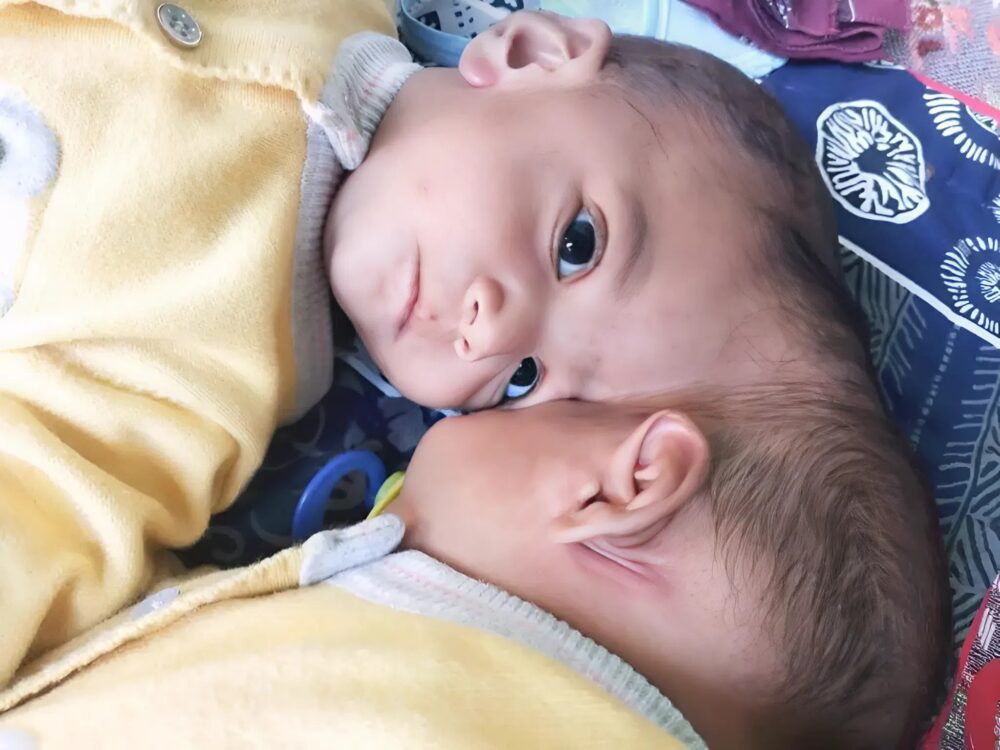
Minal and Mirha, born in Pakistan the previous year, were separated after a complex 14-hour surgery led by British neurosurgeon Professor Noor ul Owase Jeelani at Bilkent City Hospital in Ankara, Turkey.
Conjoined at the head, with shared blood vessels and brain tissue, their separation was extremely risky.
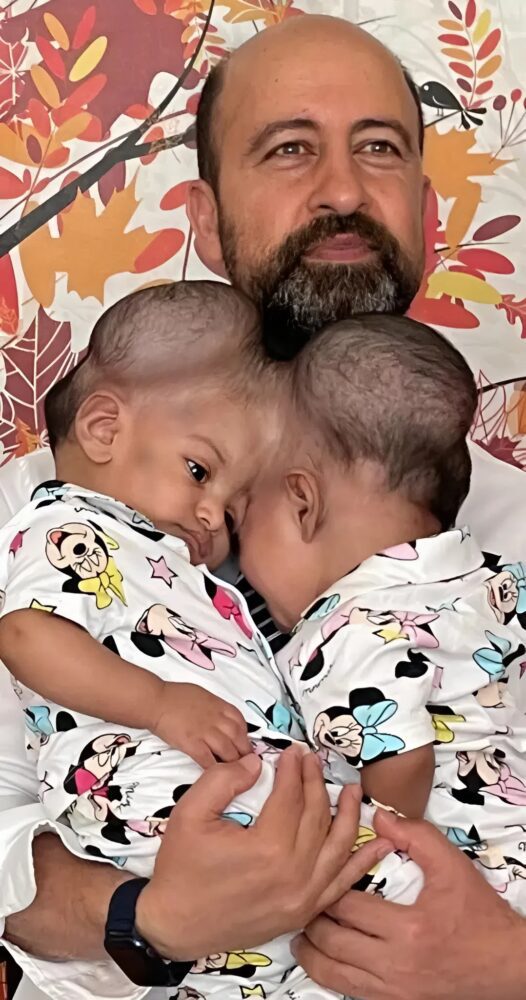
The operation was made possible through the use of mixed reality (MR) technology, which allowed doctors to simulate the procedure with 3D models before performing it. This improved accuracy and reduced risks during the procedure.
Two months after the operation, Minal and Mirha are ready to leave the hospital and return home to Pakistan.
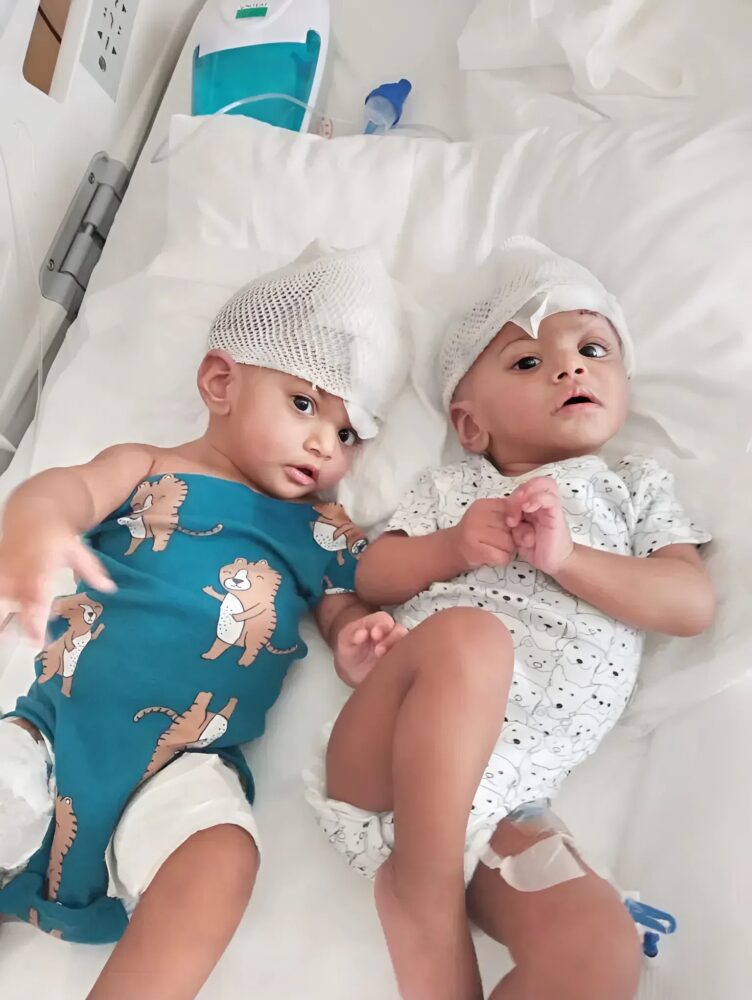
Their recovery has been described as “wonderful” by Professor Jeelani, who emphasized the significance of this success for the twins’ family. They are now expected to lead healthy and independent lives.
This intervention marks a turning point in the use of advanced medical technologies, making surgeries safer and less invasive.
Professor Jeelani, already recognized for his complex surgeries, had led a 27-hour operation in 2022 involving more than 100 doctors remotely.