
They were conjoined twins, connected at the pelvis. 😱 They shared a bladder, a uterus, fused intestines, and three legs. 😱
This rare condition, affecting one in 200,000 births, shocked their parents, who didn’t know if their daughters would survive. Their mother confessed that she would have preferred to go blind than see her daughters in this condition.
The early years of Zita and Gita were marked by constant care. They spent a lot of time in a specialized boarding school, where they learned to live with their fused bodies. Each controlled one leg, while the third remained motionless.
At 10 years old, Zita’s health deteriorated sharply when she stopped eating, prompting their mother to search for a solution.
In 2003, Russian doctors agreed to perform a risky operation to separate them.
👉 Let’s look at the photos after the separation, already grown up, in the link in the 1st comment below 👇👇👇👇.

On March 26, 2003, after 12 hours of surgery, Zita and Gita were separated. However, this operation did not eliminate the challenges. Each girl lost a leg and had to adapt to fragile health. The media coverage of their story, particularly thanks to the host Andrey Malakhov, drew public attention, allowing them to receive financial and medical support.
The difficulties persisted. In 2010, admission to a medical school in Moscow was promised, but it was eventually canceled. However, they received support from the president of Chechnya, who helped them realize their dream of visiting the Grand Mosque in Grozny.
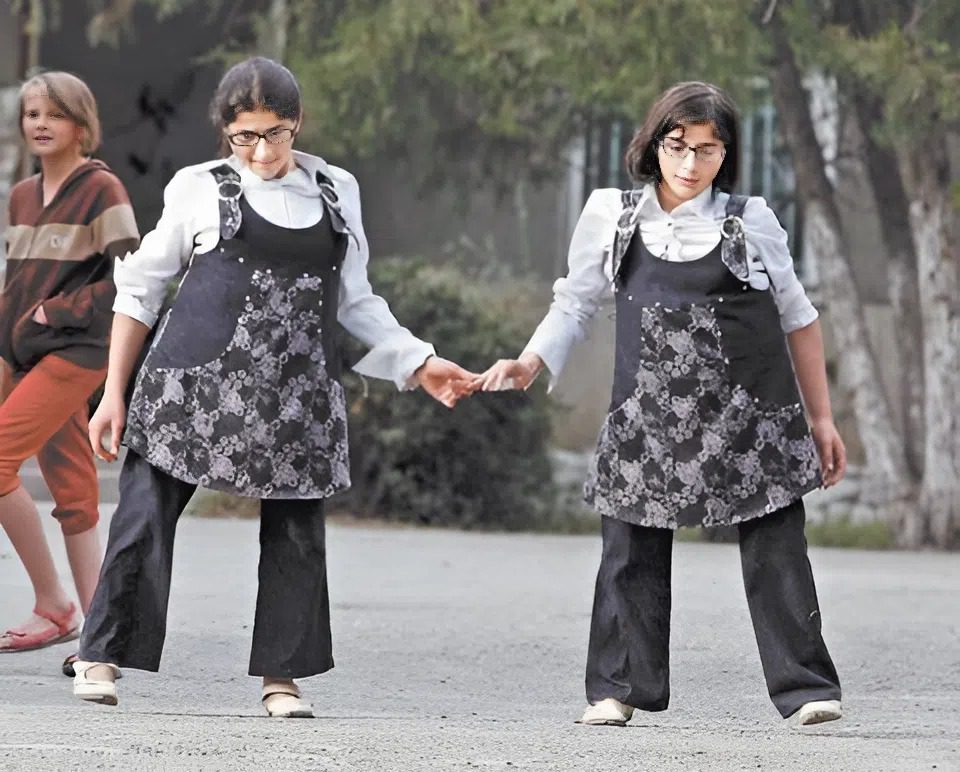
In 2013, they studied at a religious school where they learned Islam and Arabic. But Zita’s health deteriorated further, and in 2015, she died from multiple organ failure.
The loss of Zita was a devastating shock for Gita. She continued to live in Kyrgyzstan, where she founded a center to help disabled children with her mother. In 2018, she obtained a Russian passport, which allowed her to access medical treatment in Russia. In 2019, Gita was diagnosed with colon cancer, which she overcame after surgery. She is currently in remission.
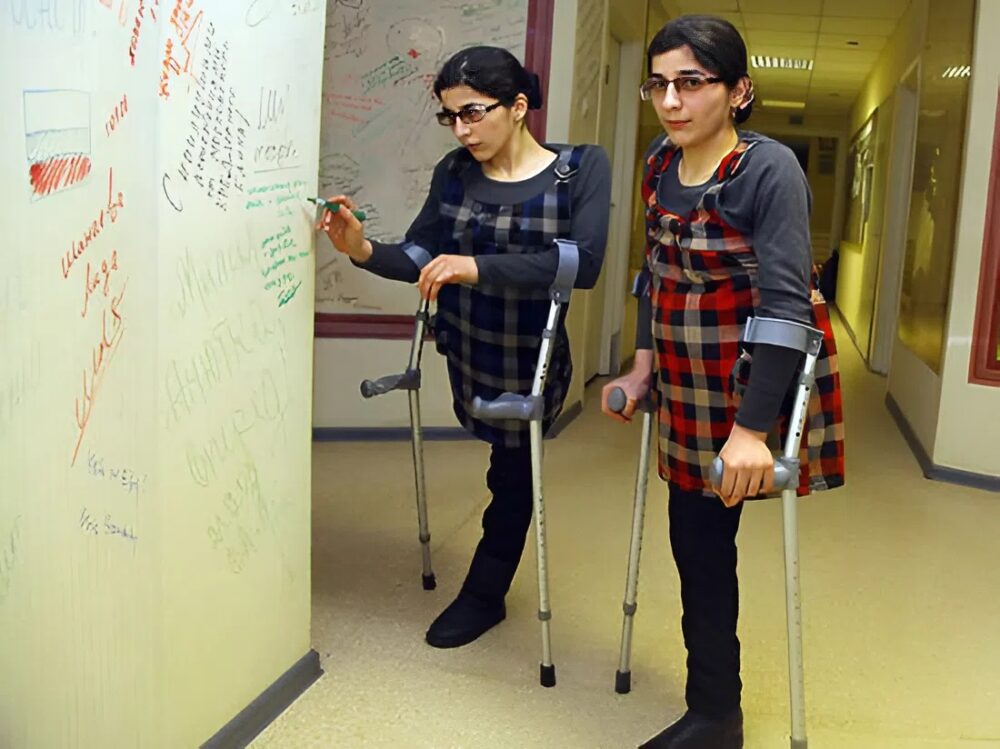
Gita shares her journey through a popular blog, where she talks about the pain of losing her sister and her desire to live a “normal” life. Although she often felt jealous of her non-disabled sisters, she has learned to accept her condition.
The story of Zita and Gita illustrates the strength of human resilience in the face of extreme challenges, while highlighting the complexity of living with severe disability.